
EVEREST in Motion is a series exploring the technical milestones of the EVEREST project. To reach the pinnacle of nuclear safety and modeling, we must ensure our tools are as versatile as they are accurate.
In this interview, we sit down with Mathieu Hursin (Paul Scherrer Institut), the leader of Work Package 2 to discuss the "FENNECS" tool and the challenge of applying advanced modeling to the complex geometries of the Budapest Research Reactor (BME). Discover how the team is testing the limits of current software to ensure our high-resolution methods can master even the most "non-standard" reactor environments on the path to the project's summit.
Which part of the EVEREST work are you leading?
I am the lead of Work Package 2 (WP2) in the EVEREST project, which is dedicated to the development, application, and assessment of advanced high-resolution and multi-physics modeling approaches for reactor analysis. Within this broader scope and for this specific communication, I’d like to focus on the advanced neutronic modeling of research reactors, using the Budapest Research Reactor (BME) as a key demonstrator to explore the capabilities and limitations of these tools when applied to complex and highly heterogeneous reactor configurations.
Could you share some early results from your work package and the strategic roadmap that will guide your next steps?
WP2 activities are currently in an active development phase. A central element of the ongoing work is the advanced modeling of the research reactors. Analysis of the BME reactor in Hungary with the FENNECS tool developed by GRS is one example of such work. It serves as a challenging test case for the methods addressed in WP2. This work is helping us answer a core WP2 question: whether advanced modeling approaches, initially developed mainly for power reactors, can effectively handle the “non-standard” geometries and strong neutron leakage effects typical of research reactors.
Initial results show that the geometrical representation capabilities are very strong, but they also highlight limitations in terms of accuracy (see below for an illustration). In particular, neutron leakage has a significant impact on the results, and the SPH method currently used for cross-section generation may not be fully suited for such strongly heterogeneous systems where feedback phenomena play a large role. Although the work is still in progress, these findings already provide valuable guidance for refining the modeling strategy within WP2.
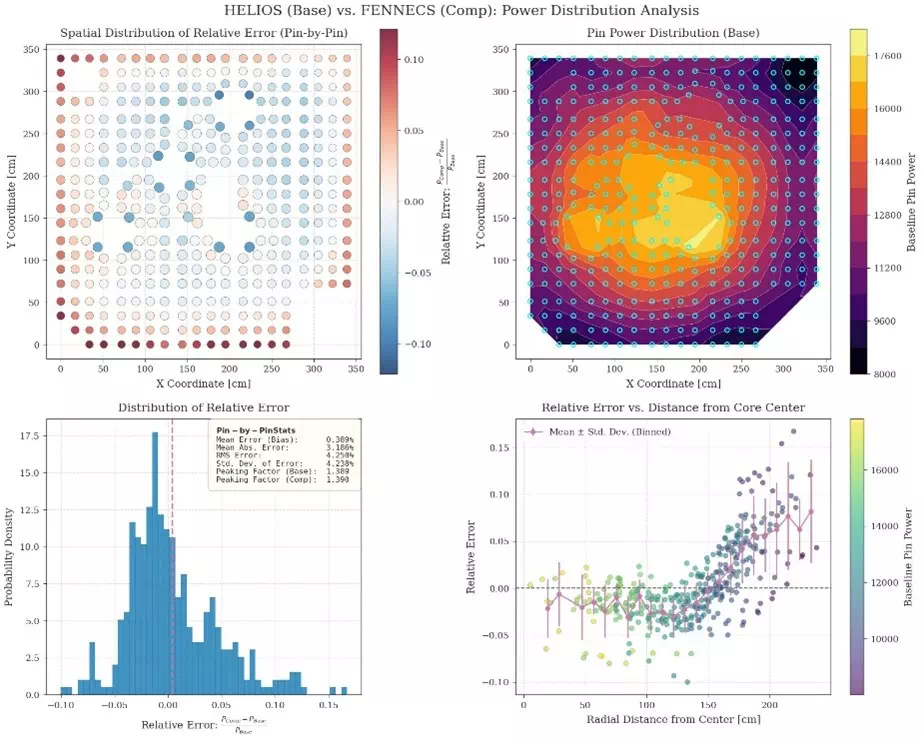
Figure 1: HELIOS (Base) vs. FENNECS (Comp): Power Distribution Analysis
What’s next for your Work Package?
The next phase of WP2, especially Year 2 of the project, will be crucial. The main objective will be to deliver accurate and well-characterised advanced models to the EVEREST consortium. A key step will be the validation of these models against experimental measurements obtained during the first project year, allowing us to quantify the accuracy and reliability of the advanced tools.
Based on this validation effort, WP2 will further refine modeling approaches and assumptions, ensuring that the advanced methods promoted within EVEREST are both innovative and robust, and that they can be confidently applied to complex reactor systems, including research reactors.